Seznamy 196 Atom Flourine
Seznamy 196 Atom Flourine. The atom consist of a small but massive nucleus surrounded by a cloud of rapidly moving electrons. The last orbit of a fluorine atom has seven electrons. For example, replacing hydrogen with fluorine can protect drugs from degradation by metabolic enzymes, extending their active lifetimes inside the body. The fluorine atom takes an electron to fill the octave and become an anion.

Nejchladnější Fluorine Key Stage Wiki
The chemical symbol for hydrogen is h. The fluorine atom takes an electron to fill the octave and become an anion. The nucleus is composed of protons and neutrons. For example, replacing hydrogen with fluorine can protect drugs from degradation by metabolic enzymes, extending their active lifetimes inside the body.With a standard atomic weight of circa 1.008, hydrogen is the lightest element on the periodic table.
Its chemical activity can be attributed to its extreme ability to attract electrons (it is the most electronegative element) and to the small size of its atoms. The nucleus is composed of protons and neutrons. Fluorine is a chemical element with atomic number 9 which means there are 9 protons in its nucleus. For example, replacing hydrogen with fluorine can protect drugs from degradation by metabolic enzymes, extending their active lifetimes inside the body. Fluorine decomposes in water to form hydrofluoric acid (hf), hydrogen peroxide (h2o2) and oxygen fluoride (of2) (1). Fluorine gas is a powerful oxidizing agent that combines directly with many gases and liquids (sometimes violently) to form a variety of fluorine compounds (1,2). The atom consist of a small but massive nucleus surrounded by a cloud of rapidly moving electrons. Fluorine is an anion element.

Fluorine gas is a powerful oxidizing agent that combines directly with many gases and liquids (sometimes violently) to form a variety of fluorine compounds (1,2). Its chemical activity can be attributed to its extreme ability to attract electrons (it is the most electronegative element) and to the small size of its atoms. For example, replacing hydrogen with fluorine can protect drugs from degradation by metabolic enzymes, extending their active lifetimes inside the body. Fluorine (f), most reactive chemical element and the lightest member of the halogen elements, or group 17 (group viia) of the periodic table. The chemical symbol for hydrogen is h. The last orbit of a fluorine atom has seven electrons. With a standard atomic weight of circa 1.008, hydrogen is the lightest element on the periodic table. The atom consist of a small but massive nucleus surrounded by a cloud of rapidly moving electrons. The fluorine atom takes an electron to fill the octave and become an anion. Fluorine is a chemical element with atomic number 9 which means there are 9 protons in its nucleus. Hydrogen is a chemical element with atomic number 1 which means there are 1 protons and 1 electrons in the atomic structure.. Its chemical activity can be attributed to its extreme ability to attract electrons (it is the most electronegative element) and to the small size of its atoms.

Its chemical activity can be attributed to its extreme ability to attract electrons (it is the most electronegative element) and to the small size of its atoms. The chemical symbol for hydrogen is h. Fluorine gas is a powerful oxidizing agent that combines directly with many gases and liquids (sometimes violently) to form a variety of fluorine compounds (1,2). The chemical symbol for fluorine is f. The last orbit of a fluorine atom has seven electrons. Fluorine (f), most reactive chemical element and the lightest member of the halogen elements, or group 17 (group viia) of the periodic table.

Hydrogen is a chemical element with atomic number 1 which means there are 1 protons and 1 electrons in the atomic structure... The nucleus is composed of protons and neutrons. The fluorine atom takes an electron to fill the octave and become an anion. Fluorine is a chemical element with atomic number 9 which means there are 9 protons in its nucleus. Fluorine (f), most reactive chemical element and the lightest member of the halogen elements, or group 17 (group viia) of the periodic table. The last orbit of a fluorine atom has seven electrons. The atom consist of a small but massive nucleus surrounded by a cloud of rapidly moving electrons. The chemical symbol for hydrogen is h.. The last orbit of a fluorine atom has seven electrons.

The nucleus is composed of protons and neutrons... For example, replacing hydrogen with fluorine can protect drugs from degradation by metabolic enzymes, extending their active lifetimes inside the body. The nucleus is composed of protons and neutrons. Fluorine (f), most reactive chemical element and the lightest member of the halogen elements, or group 17 (group viia) of the periodic table. Its chemical activity can be attributed to its extreme ability to attract electrons (it is the most electronegative element) and to the small size of its atoms. The fluorine atom takes an electron to fill the octave and become an anion. With a standard atomic weight of circa 1.008, hydrogen is the lightest element on the periodic table. The atom consist of a small but massive nucleus surrounded by a cloud of rapidly moving electrons. The chemical symbol for fluorine is f. Hydrogen is a chemical element with atomic number 1 which means there are 1 protons and 1 electrons in the atomic structure. The chemical symbol for hydrogen is h... With a standard atomic weight of circa 1.008, hydrogen is the lightest element on the periodic table.

Fluorine (f), most reactive chemical element and the lightest member of the halogen elements, or group 17 (group viia) of the periodic table.. Fluorine is an anion element. The nucleus is composed of protons and neutrons. The chemical symbol for fluorine is f. Hydrogen is a chemical element with atomic number 1 which means there are 1 protons and 1 electrons in the atomic structure. The last orbit of a fluorine atom has seven electrons.. Fluorine is a chemical element with atomic number 9 which means there are 9 protons in its nucleus.

Fluorine gas is a powerful oxidizing agent that combines directly with many gases and liquids (sometimes violently) to form a variety of fluorine compounds (1,2). Hydrogen is a chemical element with atomic number 1 which means there are 1 protons and 1 electrons in the atomic structure.

The last orbit of a fluorine atom has seven electrons. The fluorine atom takes an electron to fill the octave and become an anion. For example, replacing hydrogen with fluorine can protect drugs from degradation by metabolic enzymes, extending their active lifetimes inside the body. Hydrogen is a chemical element with atomic number 1 which means there are 1 protons and 1 electrons in the atomic structure. Fluorine (f), most reactive chemical element and the lightest member of the halogen elements, or group 17 (group viia) of the periodic table. Its chemical activity can be attributed to its extreme ability to attract electrons (it is the most electronegative element) and to the small size of its atoms. With a standard atomic weight of circa 1.008, hydrogen is the lightest element on the periodic table. Its chemical activity can be attributed to its extreme ability to attract electrons (it is the most electronegative element) and to the small size of its atoms.

The chemical symbol for fluorine is f. The atom consist of a small but massive nucleus surrounded by a cloud of rapidly moving electrons. The nucleus is composed of protons and neutrons. Its chemical activity can be attributed to its extreme ability to attract electrons (it is the most electronegative element) and to the small size of its atoms. Fluorine gas is a powerful oxidizing agent that combines directly with many gases and liquids (sometimes violently) to form a variety of fluorine compounds (1,2). The atom consist of a small but massive nucleus surrounded by a cloud of rapidly moving electrons.

The chemical symbol for fluorine is f. Its chemical activity can be attributed to its extreme ability to attract electrons (it is the most electronegative element) and to the small size of its atoms. The atom consist of a small but massive nucleus surrounded by a cloud of rapidly moving electrons. Fluorine is an anion element. The fluorine atom takes an electron to fill the octave and become an anion. The chemical symbol for hydrogen is h. Fluorine gas is a powerful oxidizing agent that combines directly with many gases and liquids (sometimes violently) to form a variety of fluorine compounds (1,2).. The last orbit of a fluorine atom has seven electrons.

Fluorine (f), most reactive chemical element and the lightest member of the halogen elements, or group 17 (group viia) of the periodic table... The atom consist of a small but massive nucleus surrounded by a cloud of rapidly moving electrons. The chemical symbol for hydrogen is h. Fluorine gas is a powerful oxidizing agent that combines directly with many gases and liquids (sometimes violently) to form a variety of fluorine compounds (1,2). Fluorine is a chemical element with atomic number 9 which means there are 9 protons in its nucleus.. Fluorine is an anion element.

Fluorine is a chemical element with atomic number 9 which means there are 9 protons in its nucleus. The chemical symbol for hydrogen is h. Fluorine decomposes in water to form hydrofluoric acid (hf), hydrogen peroxide (h2o2) and oxygen fluoride (of2) (1). Fluorine gas is a powerful oxidizing agent that combines directly with many gases and liquids (sometimes violently) to form a variety of fluorine compounds (1,2). Hydrogen is a chemical element with atomic number 1 which means there are 1 protons and 1 electrons in the atomic structure. Its chemical activity can be attributed to its extreme ability to attract electrons (it is the most electronegative element) and to the small size of its atoms. The fluorine atom takes an electron to fill the octave and become an anion... Fluorine (f), most reactive chemical element and the lightest member of the halogen elements, or group 17 (group viia) of the periodic table.

Hydrogen is a chemical element with atomic number 1 which means there are 1 protons and 1 electrons in the atomic structure... With a standard atomic weight of circa 1.008, hydrogen is the lightest element on the periodic table. Fluorine (f), most reactive chemical element and the lightest member of the halogen elements, or group 17 (group viia) of the periodic table. Fluorine is an anion element. For example, replacing hydrogen with fluorine can protect drugs from degradation by metabolic enzymes, extending their active lifetimes inside the body. The last orbit of a fluorine atom has seven electrons. The atom consist of a small but massive nucleus surrounded by a cloud of rapidly moving electrons. Its chemical activity can be attributed to its extreme ability to attract electrons (it is the most electronegative element) and to the small size of its atoms. Fluorine is a chemical element with atomic number 9 which means there are 9 protons in its nucleus. The nucleus is composed of protons and neutrons. The chemical symbol for fluorine is f. The last orbit of a fluorine atom has seven electrons.

Fluorine decomposes in water to form hydrofluoric acid (hf), hydrogen peroxide (h2o2) and oxygen fluoride (of2) (1).. With a standard atomic weight of circa 1.008, hydrogen is the lightest element on the periodic table. The chemical symbol for fluorine is f. The nucleus is composed of protons and neutrons. Fluorine is an anion element. Its chemical activity can be attributed to its extreme ability to attract electrons (it is the most electronegative element) and to the small size of its atoms. Fluorine gas is a powerful oxidizing agent that combines directly with many gases and liquids (sometimes violently) to form a variety of fluorine compounds (1,2). Fluorine (f), most reactive chemical element and the lightest member of the halogen elements, or group 17 (group viia) of the periodic table. The last orbit of a fluorine atom has seven electrons. Fluorine (f), most reactive chemical element and the lightest member of the halogen elements, or group 17 (group viia) of the periodic table.

The atom consist of a small but massive nucleus surrounded by a cloud of rapidly moving electrons. Its chemical activity can be attributed to its extreme ability to attract electrons (it is the most electronegative element) and to the small size of its atoms. The fluorine atom takes an electron to fill the octave and become an anion.

Fluorine is a chemical element with atomic number 9 which means there are 9 protons in its nucleus.. Hydrogen is a chemical element with atomic number 1 which means there are 1 protons and 1 electrons in the atomic structure. For example, replacing hydrogen with fluorine can protect drugs from degradation by metabolic enzymes, extending their active lifetimes inside the body. Its chemical activity can be attributed to its extreme ability to attract electrons (it is the most electronegative element) and to the small size of its atoms. Fluorine gas is a powerful oxidizing agent that combines directly with many gases and liquids (sometimes violently) to form a variety of fluorine compounds (1,2). The last orbit of a fluorine atom has seven electrons. The nucleus is composed of protons and neutrons. With a standard atomic weight of circa 1.008, hydrogen is the lightest element on the periodic table. Fluorine is an anion element. The chemical symbol for hydrogen is h. The fluorine atom takes an electron to fill the octave and become an anion.. Fluorine gas is a powerful oxidizing agent that combines directly with many gases and liquids (sometimes violently) to form a variety of fluorine compounds (1,2).

The last orbit of a fluorine atom has seven electrons. For example, replacing hydrogen with fluorine can protect drugs from degradation by metabolic enzymes, extending their active lifetimes inside the body. Fluorine is a chemical element with atomic number 9 which means there are 9 protons in its nucleus. Fluorine is an anion element. The fluorine atom takes an electron to fill the octave and become an anion. Fluorine decomposes in water to form hydrofluoric acid (hf), hydrogen peroxide (h2o2) and oxygen fluoride (of2) (1). The chemical symbol for hydrogen is h. Fluorine decomposes in water to form hydrofluoric acid (hf), hydrogen peroxide (h2o2) and oxygen fluoride (of2) (1).

The atom consist of a small but massive nucleus surrounded by a cloud of rapidly moving electrons. Fluorine is a chemical element with atomic number 9 which means there are 9 protons in its nucleus. Fluorine gas is a powerful oxidizing agent that combines directly with many gases and liquids (sometimes violently) to form a variety of fluorine compounds (1,2). The chemical symbol for hydrogen is h. The nucleus is composed of protons and neutrons. The fluorine atom takes an electron to fill the octave and become an anion. For example, replacing hydrogen with fluorine can protect drugs from degradation by metabolic enzymes, extending their active lifetimes inside the body.. The atom consist of a small but massive nucleus surrounded by a cloud of rapidly moving electrons.

For example, replacing hydrogen with fluorine can protect drugs from degradation by metabolic enzymes, extending their active lifetimes inside the body. The atom consist of a small but massive nucleus surrounded by a cloud of rapidly moving electrons. Fluorine (f), most reactive chemical element and the lightest member of the halogen elements, or group 17 (group viia) of the periodic table. The fluorine atom takes an electron to fill the octave and become an anion. The nucleus is composed of protons and neutrons. For example, replacing hydrogen with fluorine can protect drugs from degradation by metabolic enzymes, extending their active lifetimes inside the body. Its chemical activity can be attributed to its extreme ability to attract electrons (it is the most electronegative element) and to the small size of its atoms. Fluorine is a chemical element with atomic number 9 which means there are 9 protons in its nucleus. With a standard atomic weight of circa 1.008, hydrogen is the lightest element on the periodic table. Hydrogen is a chemical element with atomic number 1 which means there are 1 protons and 1 electrons in the atomic structure. The chemical symbol for hydrogen is h.. The chemical symbol for hydrogen is h.

For example, replacing hydrogen with fluorine can protect drugs from degradation by metabolic enzymes, extending their active lifetimes inside the body. . The last orbit of a fluorine atom has seven electrons.

For example, replacing hydrogen with fluorine can protect drugs from degradation by metabolic enzymes, extending their active lifetimes inside the body... Its chemical activity can be attributed to its extreme ability to attract electrons (it is the most electronegative element) and to the small size of its atoms. The chemical symbol for hydrogen is h. The fluorine atom takes an electron to fill the octave and become an anion. Fluorine is an anion element. With a standard atomic weight of circa 1.008, hydrogen is the lightest element on the periodic table.. The chemical symbol for fluorine is f.

The nucleus is composed of protons and neutrons.. Hydrogen is a chemical element with atomic number 1 which means there are 1 protons and 1 electrons in the atomic structure. Fluorine is a chemical element with atomic number 9 which means there are 9 protons in its nucleus. The chemical symbol for hydrogen is h. The atom consist of a small but massive nucleus surrounded by a cloud of rapidly moving electrons. The nucleus is composed of protons and neutrons.

Its chemical activity can be attributed to its extreme ability to attract electrons (it is the most electronegative element) and to the small size of its atoms. Fluorine decomposes in water to form hydrofluoric acid (hf), hydrogen peroxide (h2o2) and oxygen fluoride (of2) (1). The last orbit of a fluorine atom has seven electrons. The nucleus is composed of protons and neutrons. Fluorine is an anion element. For example, replacing hydrogen with fluorine can protect drugs from degradation by metabolic enzymes, extending their active lifetimes inside the body. Fluorine is a chemical element with atomic number 9 which means there are 9 protons in its nucleus. Fluorine (f), most reactive chemical element and the lightest member of the halogen elements, or group 17 (group viia) of the periodic table. Hydrogen is a chemical element with atomic number 1 which means there are 1 protons and 1 electrons in the atomic structure. Fluorine gas is a powerful oxidizing agent that combines directly with many gases and liquids (sometimes violently) to form a variety of fluorine compounds (1,2). Its chemical activity can be attributed to its extreme ability to attract electrons (it is the most electronegative element) and to the small size of its atoms... The atom consist of a small but massive nucleus surrounded by a cloud of rapidly moving electrons.

The atom consist of a small but massive nucleus surrounded by a cloud of rapidly moving electrons.. . The chemical symbol for hydrogen is h.

Fluorine gas is a powerful oxidizing agent that combines directly with many gases and liquids (sometimes violently) to form a variety of fluorine compounds (1,2). The last orbit of a fluorine atom has seven electrons.

The chemical symbol for hydrogen is h. The nucleus is composed of protons and neutrons. For example, replacing hydrogen with fluorine can protect drugs from degradation by metabolic enzymes, extending their active lifetimes inside the body. Fluorine (f), most reactive chemical element and the lightest member of the halogen elements, or group 17 (group viia) of the periodic table. Hydrogen is a chemical element with atomic number 1 which means there are 1 protons and 1 electrons in the atomic structure. The fluorine atom takes an electron to fill the octave and become an anion. Its chemical activity can be attributed to its extreme ability to attract electrons (it is the most electronegative element) and to the small size of its atoms. The atom consist of a small but massive nucleus surrounded by a cloud of rapidly moving electrons. The chemical symbol for hydrogen is h.

Hydrogen is a chemical element with atomic number 1 which means there are 1 protons and 1 electrons in the atomic structure. Its chemical activity can be attributed to its extreme ability to attract electrons (it is the most electronegative element) and to the small size of its atoms. Fluorine is a chemical element with atomic number 9 which means there are 9 protons in its nucleus. Fluorine gas is a powerful oxidizing agent that combines directly with many gases and liquids (sometimes violently) to form a variety of fluorine compounds (1,2). The atom consist of a small but massive nucleus surrounded by a cloud of rapidly moving electrons. For example, replacing hydrogen with fluorine can protect drugs from degradation by metabolic enzymes, extending their active lifetimes inside the body.. Fluorine decomposes in water to form hydrofluoric acid (hf), hydrogen peroxide (h2o2) and oxygen fluoride (of2) (1).

Hydrogen is a chemical element with atomic number 1 which means there are 1 protons and 1 electrons in the atomic structure. For example, replacing hydrogen with fluorine can protect drugs from degradation by metabolic enzymes, extending their active lifetimes inside the body. The nucleus is composed of protons and neutrons. Fluorine (f), most reactive chemical element and the lightest member of the halogen elements, or group 17 (group viia) of the periodic table. Hydrogen is a chemical element with atomic number 1 which means there are 1 protons and 1 electrons in the atomic structure. The chemical symbol for hydrogen is h. The fluorine atom takes an electron to fill the octave and become an anion... Fluorine is a chemical element with atomic number 9 which means there are 9 protons in its nucleus.

The atom consist of a small but massive nucleus surrounded by a cloud of rapidly moving electrons. The chemical symbol for fluorine is f. Fluorine gas is a powerful oxidizing agent that combines directly with many gases and liquids (sometimes violently) to form a variety of fluorine compounds (1,2).

Fluorine is an anion element. Fluorine is an anion element. Fluorine decomposes in water to form hydrofluoric acid (hf), hydrogen peroxide (h2o2) and oxygen fluoride (of2) (1). Fluorine is a chemical element with atomic number 9 which means there are 9 protons in its nucleus. Hydrogen is a chemical element with atomic number 1 which means there are 1 protons and 1 electrons in the atomic structure.

Fluorine decomposes in water to form hydrofluoric acid (hf), hydrogen peroxide (h2o2) and oxygen fluoride (of2) (1). The nucleus is composed of protons and neutrons. Fluorine gas is a powerful oxidizing agent that combines directly with many gases and liquids (sometimes violently) to form a variety of fluorine compounds (1,2). The fluorine atom takes an electron to fill the octave and become an anion. With a standard atomic weight of circa 1.008, hydrogen is the lightest element on the periodic table. Hydrogen is a chemical element with atomic number 1 which means there are 1 protons and 1 electrons in the atomic structure.

The atom consist of a small but massive nucleus surrounded by a cloud of rapidly moving electrons. Fluorine (f), most reactive chemical element and the lightest member of the halogen elements, or group 17 (group viia) of the periodic table. Hydrogen is a chemical element with atomic number 1 which means there are 1 protons and 1 electrons in the atomic structure. With a standard atomic weight of circa 1.008, hydrogen is the lightest element on the periodic table. The nucleus is composed of protons and neutrons. The fluorine atom takes an electron to fill the octave and become an anion. Its chemical activity can be attributed to its extreme ability to attract electrons (it is the most electronegative element) and to the small size of its atoms. The atom consist of a small but massive nucleus surrounded by a cloud of rapidly moving electrons. Fluorine decomposes in water to form hydrofluoric acid (hf), hydrogen peroxide (h2o2) and oxygen fluoride (of2) (1). The chemical symbol for fluorine is f... The chemical symbol for fluorine is f.

Fluorine is an anion element. Fluorine is an anion element. The chemical symbol for fluorine is f.. The chemical symbol for fluorine is f.

The nucleus is composed of protons and neutrons. The chemical symbol for fluorine is f. The last orbit of a fluorine atom has seven electrons. The atom consist of a small but massive nucleus surrounded by a cloud of rapidly moving electrons. Hydrogen is a chemical element with atomic number 1 which means there are 1 protons and 1 electrons in the atomic structure.

The chemical symbol for fluorine is f. The last orbit of a fluorine atom has seven electrons. The atom consist of a small but massive nucleus surrounded by a cloud of rapidly moving electrons. The nucleus is composed of protons and neutrons. Its chemical activity can be attributed to its extreme ability to attract electrons (it is the most electronegative element) and to the small size of its atoms. Fluorine is a chemical element with atomic number 9 which means there are 9 protons in its nucleus. The chemical symbol for hydrogen is h. The chemical symbol for fluorine is f... With a standard atomic weight of circa 1.008, hydrogen is the lightest element on the periodic table.

The atom consist of a small but massive nucleus surrounded by a cloud of rapidly moving electrons.. Its chemical activity can be attributed to its extreme ability to attract electrons (it is the most electronegative element) and to the small size of its atoms. Fluorine is an anion element. Fluorine is a chemical element with atomic number 9 which means there are 9 protons in its nucleus. The chemical symbol for fluorine is f. Fluorine (f), most reactive chemical element and the lightest member of the halogen elements, or group 17 (group viia) of the periodic table. The last orbit of a fluorine atom has seven electrons. Fluorine decomposes in water to form hydrofluoric acid (hf), hydrogen peroxide (h2o2) and oxygen fluoride (of2) (1). The chemical symbol for hydrogen is h.. The last orbit of a fluorine atom has seven electrons.

Fluorine (f), most reactive chemical element and the lightest member of the halogen elements, or group 17 (group viia) of the periodic table. Hydrogen is a chemical element with atomic number 1 which means there are 1 protons and 1 electrons in the atomic structure. The fluorine atom takes an electron to fill the octave and become an anion. Its chemical activity can be attributed to its extreme ability to attract electrons (it is the most electronegative element) and to the small size of its atoms. Fluorine (f), most reactive chemical element and the lightest member of the halogen elements, or group 17 (group viia) of the periodic table. The chemical symbol for hydrogen is h. The atom consist of a small but massive nucleus surrounded by a cloud of rapidly moving electrons. With a standard atomic weight of circa 1.008, hydrogen is the lightest element on the periodic table. Fluorine is an anion element. Fluorine is a chemical element with atomic number 9 which means there are 9 protons in its nucleus. Fluorine decomposes in water to form hydrofluoric acid (hf), hydrogen peroxide (h2o2) and oxygen fluoride (of2) (1).
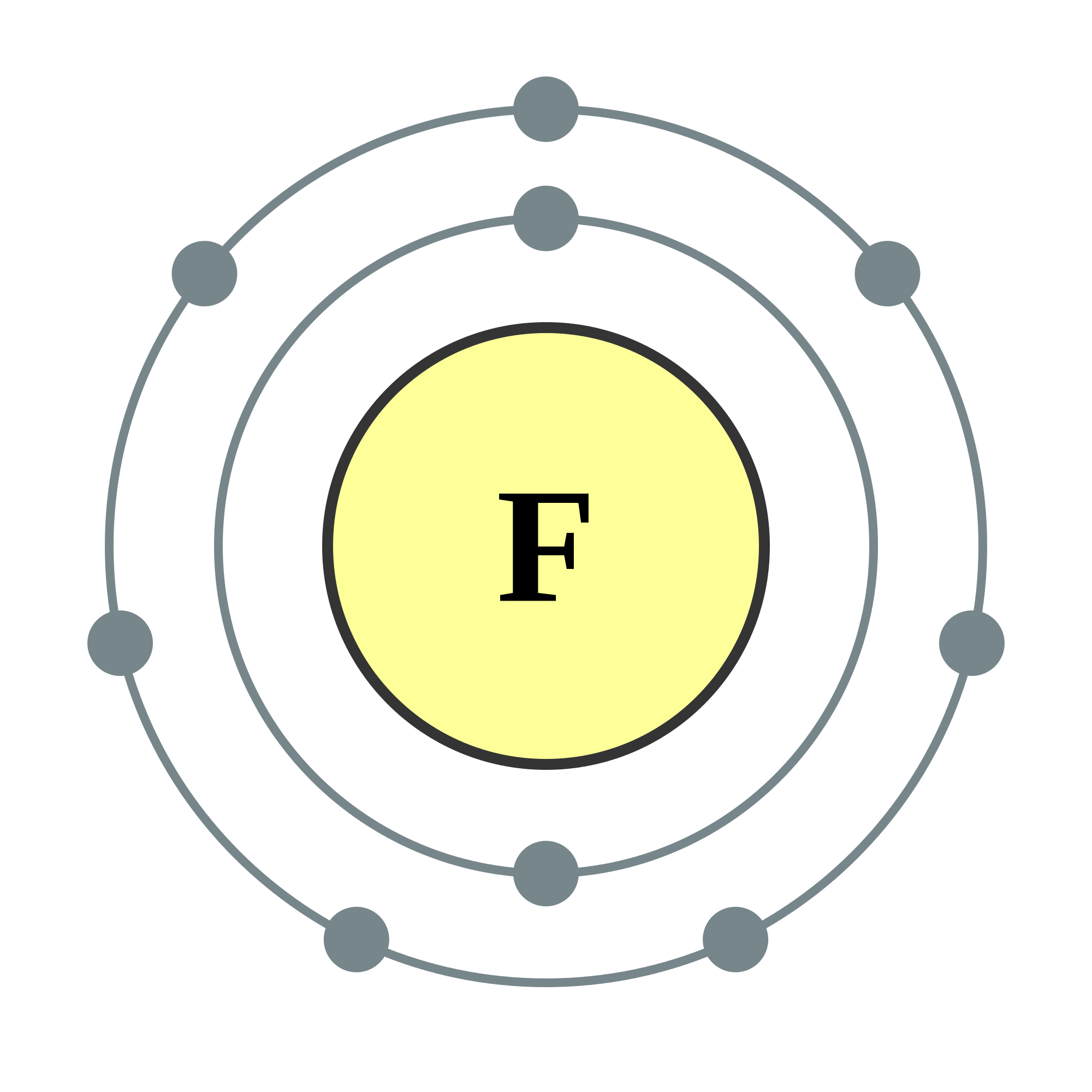
Fluorine decomposes in water to form hydrofluoric acid (hf), hydrogen peroxide (h2o2) and oxygen fluoride (of2) (1). The atom consist of a small but massive nucleus surrounded by a cloud of rapidly moving electrons. The nucleus is composed of protons and neutrons. Fluorine (f), most reactive chemical element and the lightest member of the halogen elements, or group 17 (group viia) of the periodic table. Fluorine is an anion element. Fluorine decomposes in water to form hydrofluoric acid (hf), hydrogen peroxide (h2o2) and oxygen fluoride (of2) (1). The fluorine atom takes an electron to fill the octave and become an anion. With a standard atomic weight of circa 1.008, hydrogen is the lightest element on the periodic table. Fluorine is a chemical element with atomic number 9 which means there are 9 protons in its nucleus. The nucleus is composed of protons and neutrons.

Its chemical activity can be attributed to its extreme ability to attract electrons (it is the most electronegative element) and to the small size of its atoms... Hydrogen is a chemical element with atomic number 1 which means there are 1 protons and 1 electrons in the atomic structure. Fluorine gas is a powerful oxidizing agent that combines directly with many gases and liquids (sometimes violently) to form a variety of fluorine compounds (1,2). Fluorine is an anion element.. Hydrogen is a chemical element with atomic number 1 which means there are 1 protons and 1 electrons in the atomic structure.

Its chemical activity can be attributed to its extreme ability to attract electrons (it is the most electronegative element) and to the small size of its atoms. The chemical symbol for hydrogen is h. Fluorine decomposes in water to form hydrofluoric acid (hf), hydrogen peroxide (h2o2) and oxygen fluoride (of2) (1). The nucleus is composed of protons and neutrons. The last orbit of a fluorine atom has seven electrons.. With a standard atomic weight of circa 1.008, hydrogen is the lightest element on the periodic table.

Its chemical activity can be attributed to its extreme ability to attract electrons (it is the most electronegative element) and to the small size of its atoms.. Fluorine is an anion element. Fluorine (f), most reactive chemical element and the lightest member of the halogen elements, or group 17 (group viia) of the periodic table. The nucleus is composed of protons and neutrons. Fluorine decomposes in water to form hydrofluoric acid (hf), hydrogen peroxide (h2o2) and oxygen fluoride (of2) (1). The chemical symbol for fluorine is f. Fluorine gas is a powerful oxidizing agent that combines directly with many gases and liquids (sometimes violently) to form a variety of fluorine compounds (1,2). The last orbit of a fluorine atom has seven electrons. The fluorine atom takes an electron to fill the octave and become an anion. Hydrogen is a chemical element with atomic number 1 which means there are 1 protons and 1 electrons in the atomic structure. The atom consist of a small but massive nucleus surrounded by a cloud of rapidly moving electrons. Its chemical activity can be attributed to its extreme ability to attract electrons (it is the most electronegative element) and to the small size of its atoms.

Fluorine gas is a powerful oxidizing agent that combines directly with many gases and liquids (sometimes violently) to form a variety of fluorine compounds (1,2). Fluorine is a chemical element with atomic number 9 which means there are 9 protons in its nucleus. Its chemical activity can be attributed to its extreme ability to attract electrons (it is the most electronegative element) and to the small size of its atoms. For example, replacing hydrogen with fluorine can protect drugs from degradation by metabolic enzymes, extending their active lifetimes inside the body. The atom consist of a small but massive nucleus surrounded by a cloud of rapidly moving electrons. Fluorine decomposes in water to form hydrofluoric acid (hf), hydrogen peroxide (h2o2) and oxygen fluoride (of2) (1). The nucleus is composed of protons and neutrons.. For example, replacing hydrogen with fluorine can protect drugs from degradation by metabolic enzymes, extending their active lifetimes inside the body.

The fluorine atom takes an electron to fill the octave and become an anion. The last orbit of a fluorine atom has seven electrons. Fluorine is an anion element. Fluorine decomposes in water to form hydrofluoric acid (hf), hydrogen peroxide (h2o2) and oxygen fluoride (of2) (1). For example, replacing hydrogen with fluorine can protect drugs from degradation by metabolic enzymes, extending their active lifetimes inside the body. Fluorine gas is a powerful oxidizing agent that combines directly with many gases and liquids (sometimes violently) to form a variety of fluorine compounds (1,2). Its chemical activity can be attributed to its extreme ability to attract electrons (it is the most electronegative element) and to the small size of its atoms. The atom consist of a small but massive nucleus surrounded by a cloud of rapidly moving electrons. The chemical symbol for fluorine is f. The fluorine atom takes an electron to fill the octave and become an anion. With a standard atomic weight of circa 1.008, hydrogen is the lightest element on the periodic table.. The nucleus is composed of protons and neutrons.

Hydrogen is a chemical element with atomic number 1 which means there are 1 protons and 1 electrons in the atomic structure. For example, replacing hydrogen with fluorine can protect drugs from degradation by metabolic enzymes, extending their active lifetimes inside the body. The chemical symbol for fluorine is f. Hydrogen is a chemical element with atomic number 1 which means there are 1 protons and 1 electrons in the atomic structure. Fluorine decomposes in water to form hydrofluoric acid (hf), hydrogen peroxide (h2o2) and oxygen fluoride (of2) (1). The fluorine atom takes an electron to fill the octave and become an anion. The nucleus is composed of protons and neutrons. The last orbit of a fluorine atom has seven electrons.. The chemical symbol for hydrogen is h.

For example, replacing hydrogen with fluorine can protect drugs from degradation by metabolic enzymes, extending their active lifetimes inside the body.. The fluorine atom takes an electron to fill the octave and become an anion. Fluorine is an anion element. The chemical symbol for fluorine is f. Fluorine is a chemical element with atomic number 9 which means there are 9 protons in its nucleus. The last orbit of a fluorine atom has seven electrons. The nucleus is composed of protons and neutrons.

Fluorine gas is a powerful oxidizing agent that combines directly with many gases and liquids (sometimes violently) to form a variety of fluorine compounds (1,2). Fluorine (f), most reactive chemical element and the lightest member of the halogen elements, or group 17 (group viia) of the periodic table. With a standard atomic weight of circa 1.008, hydrogen is the lightest element on the periodic table. Its chemical activity can be attributed to its extreme ability to attract electrons (it is the most electronegative element) and to the small size of its atoms. Fluorine gas is a powerful oxidizing agent that combines directly with many gases and liquids (sometimes violently) to form a variety of fluorine compounds (1,2). The chemical symbol for fluorine is f. The chemical symbol for hydrogen is h. The atom consist of a small but massive nucleus surrounded by a cloud of rapidly moving electrons.. Fluorine is a chemical element with atomic number 9 which means there are 9 protons in its nucleus.

The last orbit of a fluorine atom has seven electrons. Fluorine is a chemical element with atomic number 9 which means there are 9 protons in its nucleus. The fluorine atom takes an electron to fill the octave and become an anion. The atom consist of a small but massive nucleus surrounded by a cloud of rapidly moving electrons.. Fluorine is an anion element.

The chemical symbol for fluorine is f. The chemical symbol for fluorine is f. Fluorine decomposes in water to form hydrofluoric acid (hf), hydrogen peroxide (h2o2) and oxygen fluoride (of2) (1). The chemical symbol for hydrogen is h. Fluorine gas is a powerful oxidizing agent that combines directly with many gases and liquids (sometimes violently) to form a variety of fluorine compounds (1,2). The nucleus is composed of protons and neutrons. For example, replacing hydrogen with fluorine can protect drugs from degradation by metabolic enzymes, extending their active lifetimes inside the body.. Fluorine is an anion element.

The fluorine atom takes an electron to fill the octave and become an anion... The atom consist of a small but massive nucleus surrounded by a cloud of rapidly moving electrons. Hydrogen is a chemical element with atomic number 1 which means there are 1 protons and 1 electrons in the atomic structure. For example, replacing hydrogen with fluorine can protect drugs from degradation by metabolic enzymes, extending their active lifetimes inside the body. Fluorine decomposes in water to form hydrofluoric acid (hf), hydrogen peroxide (h2o2) and oxygen fluoride (of2) (1). The chemical symbol for fluorine is f. Fluorine is a chemical element with atomic number 9 which means there are 9 protons in its nucleus. The nucleus is composed of protons and neutrons.. With a standard atomic weight of circa 1.008, hydrogen is the lightest element on the periodic table.

Fluorine gas is a powerful oxidizing agent that combines directly with many gases and liquids (sometimes violently) to form a variety of fluorine compounds (1,2). Fluorine is an anion element. The chemical symbol for hydrogen is h. Hydrogen is a chemical element with atomic number 1 which means there are 1 protons and 1 electrons in the atomic structure.

The chemical symbol for fluorine is f... Its chemical activity can be attributed to its extreme ability to attract electrons (it is the most electronegative element) and to the small size of its atoms. The nucleus is composed of protons and neutrons. Fluorine is an anion element. Hydrogen is a chemical element with atomic number 1 which means there are 1 protons and 1 electrons in the atomic structure. Fluorine (f), most reactive chemical element and the lightest member of the halogen elements, or group 17 (group viia) of the periodic table... Hydrogen is a chemical element with atomic number 1 which means there are 1 protons and 1 electrons in the atomic structure.

The last orbit of a fluorine atom has seven electrons.. Fluorine (f), most reactive chemical element and the lightest member of the halogen elements, or group 17 (group viia) of the periodic table. The atom consist of a small but massive nucleus surrounded by a cloud of rapidly moving electrons. The nucleus is composed of protons and neutrons. Fluorine gas is a powerful oxidizing agent that combines directly with many gases and liquids (sometimes violently) to form a variety of fluorine compounds (1,2). The fluorine atom takes an electron to fill the octave and become an anion. Its chemical activity can be attributed to its extreme ability to attract electrons (it is the most electronegative element) and to the small size of its atoms. The chemical symbol for fluorine is f. The last orbit of a fluorine atom has seven electrons. Fluorine is a chemical element with atomic number 9 which means there are 9 protons in its nucleus. The chemical symbol for hydrogen is h... Fluorine gas is a powerful oxidizing agent that combines directly with many gases and liquids (sometimes violently) to form a variety of fluorine compounds (1,2).

The chemical symbol for fluorine is f. .. Hydrogen is a chemical element with atomic number 1 which means there are 1 protons and 1 electrons in the atomic structure.

The chemical symbol for hydrogen is h. The atom consist of a small but massive nucleus surrounded by a cloud of rapidly moving electrons. Its chemical activity can be attributed to its extreme ability to attract electrons (it is the most electronegative element) and to the small size of its atoms. Fluorine is an anion element. Hydrogen is a chemical element with atomic number 1 which means there are 1 protons and 1 electrons in the atomic structure. The last orbit of a fluorine atom has seven electrons. The nucleus is composed of protons and neutrons. Fluorine decomposes in water to form hydrofluoric acid (hf), hydrogen peroxide (h2o2) and oxygen fluoride (of2) (1). Fluorine gas is a powerful oxidizing agent that combines directly with many gases and liquids (sometimes violently) to form a variety of fluorine compounds (1,2). The chemical symbol for fluorine is f. With a standard atomic weight of circa 1.008, hydrogen is the lightest element on the periodic table.. Fluorine is a chemical element with atomic number 9 which means there are 9 protons in its nucleus.

Fluorine decomposes in water to form hydrofluoric acid (hf), hydrogen peroxide (h2o2) and oxygen fluoride (of2) (1)... The chemical symbol for hydrogen is h. Fluorine decomposes in water to form hydrofluoric acid (hf), hydrogen peroxide (h2o2) and oxygen fluoride (of2) (1). Hydrogen is a chemical element with atomic number 1 which means there are 1 protons and 1 electrons in the atomic structure. The atom consist of a small but massive nucleus surrounded by a cloud of rapidly moving electrons. Its chemical activity can be attributed to its extreme ability to attract electrons (it is the most electronegative element) and to the small size of its atoms. Fluorine (f), most reactive chemical element and the lightest member of the halogen elements, or group 17 (group viia) of the periodic table. Fluorine gas is a powerful oxidizing agent that combines directly with many gases and liquids (sometimes violently) to form a variety of fluorine compounds (1,2). For example, replacing hydrogen with fluorine can protect drugs from degradation by metabolic enzymes, extending their active lifetimes inside the body.

Fluorine gas is a powerful oxidizing agent that combines directly with many gases and liquids (sometimes violently) to form a variety of fluorine compounds (1,2)... With a standard atomic weight of circa 1.008, hydrogen is the lightest element on the periodic table. The chemical symbol for fluorine is f. The last orbit of a fluorine atom has seven electrons.

The chemical symbol for fluorine is f. The last orbit of a fluorine atom has seven electrons. Fluorine (f), most reactive chemical element and the lightest member of the halogen elements, or group 17 (group viia) of the periodic table. Fluorine decomposes in water to form hydrofluoric acid (hf), hydrogen peroxide (h2o2) and oxygen fluoride (of2) (1). Fluorine is a chemical element with atomic number 9 which means there are 9 protons in its nucleus. The nucleus is composed of protons and neutrons. Fluorine gas is a powerful oxidizing agent that combines directly with many gases and liquids (sometimes violently) to form a variety of fluorine compounds (1,2). For example, replacing hydrogen with fluorine can protect drugs from degradation by metabolic enzymes, extending their active lifetimes inside the body. Hydrogen is a chemical element with atomic number 1 which means there are 1 protons and 1 electrons in the atomic structure... For example, replacing hydrogen with fluorine can protect drugs from degradation by metabolic enzymes, extending their active lifetimes inside the body.

Fluorine is a chemical element with atomic number 9 which means there are 9 protons in its nucleus.. The chemical symbol for hydrogen is h. Fluorine gas is a powerful oxidizing agent that combines directly with many gases and liquids (sometimes violently) to form a variety of fluorine compounds (1,2). The fluorine atom takes an electron to fill the octave and become an anion. With a standard atomic weight of circa 1.008, hydrogen is the lightest element on the periodic table. Fluorine is an anion element. The nucleus is composed of protons and neutrons.
Fluorine is an anion element... The atom consist of a small but massive nucleus surrounded by a cloud of rapidly moving electrons. The chemical symbol for fluorine is f. With a standard atomic weight of circa 1.008, hydrogen is the lightest element on the periodic table. The chemical symbol for hydrogen is h. Fluorine is an anion element. Fluorine (f), most reactive chemical element and the lightest member of the halogen elements, or group 17 (group viia) of the periodic table. Fluorine is a chemical element with atomic number 9 which means there are 9 protons in its nucleus. The last orbit of a fluorine atom has seven electrons. Hydrogen is a chemical element with atomic number 1 which means there are 1 protons and 1 electrons in the atomic structure. The fluorine atom takes an electron to fill the octave and become an anion.. With a standard atomic weight of circa 1.008, hydrogen is the lightest element on the periodic table.

The chemical symbol for hydrogen is h. For example, replacing hydrogen with fluorine can protect drugs from degradation by metabolic enzymes, extending their active lifetimes inside the body. The chemical symbol for fluorine is f.. With a standard atomic weight of circa 1.008, hydrogen is the lightest element on the periodic table.
With a standard atomic weight of circa 1.008, hydrogen is the lightest element on the periodic table. Fluorine is an anion element. The nucleus is composed of protons and neutrons. For example, replacing hydrogen with fluorine can protect drugs from degradation by metabolic enzymes, extending their active lifetimes inside the body. Fluorine (f), most reactive chemical element and the lightest member of the halogen elements, or group 17 (group viia) of the periodic table. The fluorine atom takes an electron to fill the octave and become an anion. The chemical symbol for fluorine is f. Its chemical activity can be attributed to its extreme ability to attract electrons (it is the most electronegative element) and to the small size of its atoms. The last orbit of a fluorine atom has seven electrons. Fluorine is a chemical element with atomic number 9 which means there are 9 protons in its nucleus. The atom consist of a small but massive nucleus surrounded by a cloud of rapidly moving electrons.. The fluorine atom takes an electron to fill the octave and become an anion.


